Crafting a delicious latte or cappuccino at home usually requires a high-pressure espresso machine — and those don’t come cheap. But what if you love milk-based coffee drinks and don’t want to invest hundreds in a bulky setup?
The solution might be simpler (and more affordable) than you think: a good milk frother.
In this guide, we’ll explore the best types of milk frothers available in 2026, how to choose the right one for your needs, and how to get café-quality milk texture without an espresso machine.
Whether you want velvety steamed milk or airy foam, this article will help you choose the gear that fits your lifestyle, budget, and taste.
Why Milk Texture Matters So Much
Milk isn’t just an add-on in a latte. It’s a major ingredient — and how it’s frothed completely changes the drink’s flavor and feel.
A properly frothed milk can make even instant coffee feel like a treat. On the other hand, poorly frothed or overheated milk can ruin even the best espresso.
Texture affects sweetness, mouthfeel, and how the milk blends with your coffee. For cappuccinos, you want a thick, dry foam. For lattes, the milk should be microfoamed — smooth, silky, and slightly glossy.
The right frother gives you control over those textures, even without steam pressure.
What to Look for in a Milk Frother
Choosing the right frother depends on your habits, taste, and budget. Here are the key features to consider:
- Heating function: Some frothers heat and froth; others froth only cold milk
- Texture options: Better models offer multiple settings for latte, cappuccino, or cold foam
- Speed and noise level: Fast frothing is ideal, but quiet operation is a bonus
- Ease of cleaning: Non-stick surfaces and dishwasher-safe parts help
- Capacity: Choose based on how many drinks you make at once
- Build quality: Stainless steel lasts longer than plastic alternatives
Now let’s dive into the best options available — from manual tools to fully automatic devices.
1. The Nespresso Aeroccino 4
Best for: Simple, foolproof frothing with elegant design
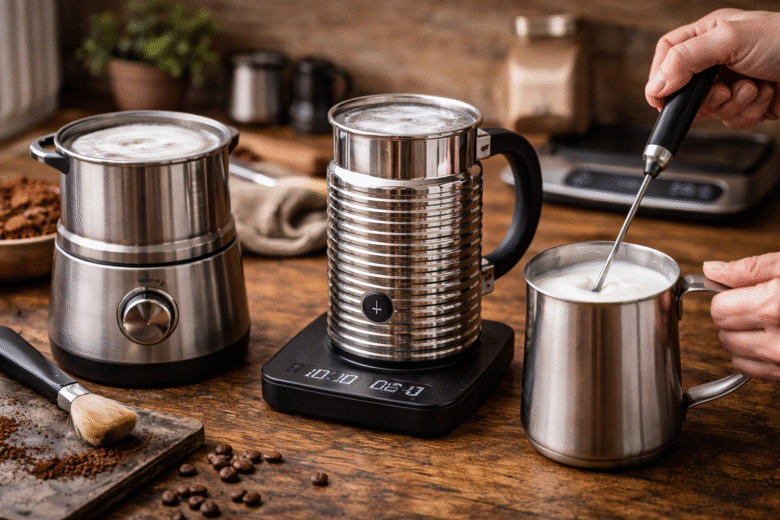
The Aeroccino 4 is one of the most popular electric frothers on the market. It offers four settings: hot foam, cold foam, light foam for cappuccinos, and dense foam for lattes. The build is sleek, with stainless steel housing and a handle for easy pouring.
It’s nearly silent during operation and takes less than 2 minutes to produce silky milk.
Pros
- One-touch operation
- Compact and quiet
- Easy to clean (dishwasher-safe jug)
- Works with dairy and non-dairy milk
Cons
- On the pricier side for a frother
- Fixed texture settings (not adjustable mid-cycle)
It’s perfect for users who want great results with minimal effort.
2. The Bodum Latteo Manual Milk Frother
Best for: Budget-conscious users who prefer manual control
This glass beaker-style frother uses a manual plunger to create foam. You heat your milk separately (in a microwave or stovetop), then pump the mesh lid to aerate it. The result is impressive for such a simple device.
It doesn’t require electricity and gives you full control over how much air you introduce into the milk.
Pros
- Very affordable
- No power needed
- Easy to clean
- Surprisingly effective foam
Cons
- Requires manual effort
- Takes a bit longer
- Not ideal for large batches
It’s a solid choice for those who don’t mind a hands-on experience.
3. The Breville Milk Café
Best for: Users who want barista-level results at home
The Milk Café is a premium electric frother that uses induction heating and a spinning disk to create rich, textured milk. It comes with two frothing disks: one for lattes and one for cappuccinos.
It allows full control over temperature and foam level — making it one of the most versatile options available.
Pros
- Adjustable temperature
- High-capacity (great for serving multiple drinks)
- Excellent microfoam quality
- Durable stainless-steel build
Cons
- Expensive (usually over $100)
- Takes up more counter space
If you take milk seriously and want results close to a steam wand, this is a worthwhile investment.
4. The Zulay Original Handheld Milk Frother
Best for: Quick cold foam or light froth on the go
This battery-powered handheld whisk creates froth in seconds. It doesn’t heat milk, but it’s great for adding texture to cold brews, matcha lattes, or reheated milk. It’s compact, affordable, and great for travel or small kitchens.
Pros
- Inexpensive
- Extremely fast
- Portable and easy to store
- Works for more than just milk (protein shakes, sauces, etc.)
Cons
- No heating
- Limited control over foam density
- Can be messy if the cup is shallow
For a low-cost way to improve your coffee game, this is a top pick.
5. The Subminimal NanoFoamer
Best for: Creating true microfoam for latte art
This high-speed handheld device bridges the gap between electric frothers and steam wands. It uses a spinning impeller to create ultra-fine bubbles — giving you actual microfoam, not just foam.
If you want to pour latte art but don’t have an espresso machine, this tool delivers texture that’s close to café quality.
Pros
- Best foam quality outside of steam wands
- Compact and rechargeable
- Works well with all milk types
- Ideal for latte art practice
Cons
- Requires separate milk heating
- Slight learning curve
- Costs more than standard handheld frothers
It’s the best option for aspiring home baristas who want café-level control.
How to Choose the Right Frother for Your Routine
To find the perfect match, ask yourself:
- Do you want automatic frothing or enjoy manual prep?
- Do you need hot and cold options?
- Are you making one drink at a time, or several?
- How important is milk texture and foam density?
Best for Beginners
- Nespresso Aeroccino
- Bodum Latteo
Best for Advanced Users
- Breville Milk Café
- Subminimal NanoFoamer
Best for Travel and Budget Use
- Zulay Handheld Frother
Tips for Frothing Without a Steam Wand
Even the best frother needs good milk and technique. Follow these guidelines to get the most out of your tool:
1. Use the Right Milk
Whole milk gives the best foam — rich, stable, and sweet. But many plant-based milks also froth well if labeled “barista edition.”
2. Heat Milk to the Ideal Temperature
For hot drinks, aim for 60–65°C (140–150°F). Overheating burns the milk and ruins sweetness.
3. Froth in a Tall Container
Using a narrow, tall container helps prevent splashing and builds better foam structure.
4. Pour Immediately After Frothing
Milk separates quickly. Swirl the container and pour right away to get smooth results in your cup.
5. Clean Your Frother After Every Use
Milk residue builds up fast and affects performance. A quick rinse or wipe right after use saves time and improves flavor.
When Should You Upgrade?
If your current frother leaves big bubbles, inconsistent texture, or takes too long to use, it may be time for an upgrade — especially if you’re drinking lattes daily.
Signs You’ve Outgrown Your Frother
- Foam collapses quickly
- Milk overheats and scorches
- Can’t get the texture you want
- Cleaning becomes a hassle
- No temperature or texture control
Even an entry-level upgrade can improve your daily coffee experience significantly.
Final Thoughts: Great Milk Doesn’t Require Expensive Gear
You don’t need a commercial espresso machine to make incredible lattes and cappuccinos at home. The right milk frother — paired with good technique — can transform your mornings.
Whether you want café-style microfoam or just a layer of soft foam for your cappuccino, there’s a tool here that solves the problem without breaking your budget.
Experiment with what you have, then upgrade based on your needs and taste preferences. With a small investment and a few minutes of practice, you can master milk at home.

Nathan Scott is a passionate coffee enthusiast with years of experience exploring the world of beans, brews, and barista techniques. From home brewing tips to discovering the perfect roast, he shares practical advice to help coffee lovers elevate their daily cup. When he’s not testing new brewing methods, Nathan is visiting local cafés in search of unique flavors and stories. His goal? To make great coffee simple, enjoyable, and accessible for everyone.