The French Press is a favorite among coffee lovers for its simplicity and bold, rich flavor. But for many home brewers, there’s a frustrating and common issue: the coffee comes out watery, weak, or thin — the exact opposite of what the French Press promises.
If you’re getting bland or diluted results from your press, the problem isn’t always the beans. Often, it comes down to technique, grind, timing, or equipment quirks you may not be aware of.
In this guide, you’ll learn exactly why your French Press coffee turns out watery and how to fix it — step by step — using the gear you already have.
What Should French Press Coffee Taste Like?
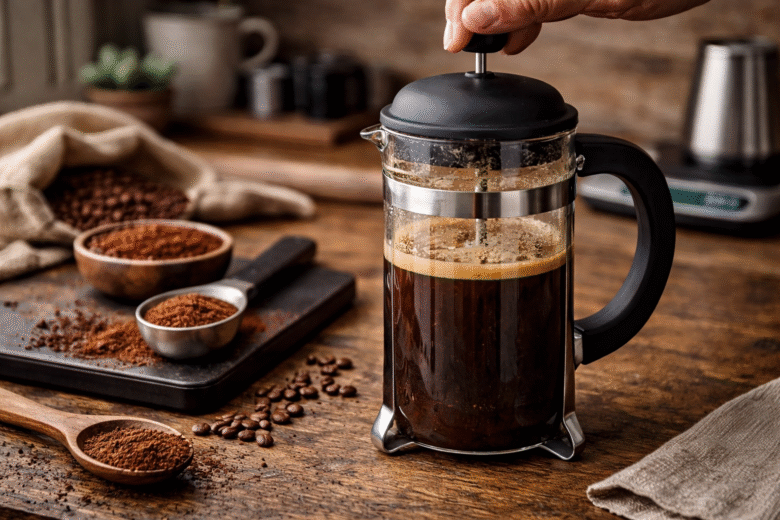
French Press coffee is known for its full-bodied flavor and thick texture. It brews by steeping coarse coffee grounds in hot water for several minutes, allowing oils and fine particles to remain in the cup. This method creates a dense, rich coffee with depth and a slightly gritty mouthfeel.
If your coffee is coming out watery, something is interfering with extraction — the process of pulling flavor from the grounds. The result is a cup that lacks strength, sweetness, or body.
Let’s break down what’s going wrong.
1. You’re Using the Wrong Grind Size
French Press requires a coarse grind — one of the coarsest settings available. If your coffee is too fine, it can over-extract and taste bitter. But if it’s too coarse, water passes through the grounds without extracting enough flavor, leading to watery coffee.
What to Look For
- Grounds should resemble coarse sea salt
- Avoid powder or dust-like particles
- Use a burr grinder for consistent size
How to Fix It
- Adjust your grinder one notch finer at a time
- Check your results after each brew
- Stay within the coarse range — don’t go as fine as drip or pour-over
Finding the sweet spot can take a few brews, but once you hit it, your coffee will improve dramatically.
2. You’re Not Using Enough Coffee
Underdosing is one of the most common reasons French Press coffee tastes weak. The recommended ratio is 1:15 — that’s one gram of coffee for every 15 grams of water.
For a standard 350ml French Press, you should use around 23g of coffee.
How to Fix It
- Use a digital scale to weigh your coffee and water
- Try starting with a 1:15 ratio and adjust based on your taste
- If you prefer a stronger cup, go for 1:14 or even 1:12
Eyeballing your measurements is rarely accurate. A scale makes your brews repeatable and balanced.
3. Your Brew Time Is Too Short
Brewing with a French Press requires at least 4 minutes of steeping time. If you plunge too early, the coffee won’t have enough time to extract, leaving you with an underwhelming cup.
What to Do
- Set a timer for 4 minutes minimum
- For a stronger brew, extend to 5 or 6 minutes
- Avoid stirring too much during steeping — it can speed up uneven extraction
Longer steep times deepen flavor, but be cautious not to go beyond 8 minutes, which may cause bitterness.
4. Your Water Temperature Is Too Low
Water that’s too cool won’t extract coffee properly. The ideal range for French Press is 90°C to 96°C (195°F to 205°F).
If you’re pouring boiling water directly from the kettle and waiting too long before brewing, the temperature may drop below effective levels.
How to Fix It
- Heat water to a full boil, then wait 30 seconds before pouring
- Use a thermometer for more precision if needed
- Preheat your French Press with hot water to avoid heat loss
Consistent water temperature helps maintain extraction and overall balance.
5. You’re Not Stirring or Blooming the Coffee
Skipping the bloom stage or failing to stir can lead to uneven saturation. This means some grounds won’t be extracted at all, leaving behind flavor potential and resulting in a watery cup.
How to Fix It
- After pouring water, let the coffee bloom for 30 seconds
- Gently stir to submerge all grounds evenly
- Let it steep undisturbed after stirring
This small habit can make a big difference in cup quality.
6. You’re Pressing Too Early (or Too Late)
Timing the press matters. Plunging too soon interrupts extraction. Waiting too long may cause over-extraction and bitterness.
What’s Ideal?
- Start the plunge at 4–5 minutes
- Apply slow, steady pressure — don’t rush
- Stop pressing when you meet resistance
Consistency in pressing is just as important as the timing.
7. Your French Press Is Letting Fines Through
Cheap or worn-out filters can let small coffee particles (fines) into the cup, creating sludge at the bottom and allowing uneven extraction. This reduces body and flavor clarity.
How to Check
- Examine your filter screen — is it torn or bent?
- Test by brewing with a paper filter inside as a trial
- Look for gaps between the plunger and the wall of the press
Solutions
- Replace or upgrade the filter screen
- Consider a dual-filter or metal mesh upgrade
- If needed, strain through a fine mesh or cloth after pressing
Improving filtration doesn’t mean removing all oils — just balancing clarity with body.
8. You’re Using Stale or Low-Quality Coffee
Even with perfect technique, old or poor-quality beans will produce flat, thin coffee. Stale beans lack volatile oils and aromatics, resulting in less extraction.
How to Spot It
- Roast date more than 4–6 weeks old
- Beans stored in open air or sunlight
- No aroma when grinding
How to Improve
- Buy fresh, whole beans in small batches
- Store in airtight containers in a cool, dark place
- Avoid bulk supermarket bags unless they show roast dates
Freshness is a non-negotiable factor in brew quality.
9. You’re Not Cleaning the French Press Properly
Leftover oils and residue from previous brews can interfere with flavor and extraction. Over time, these residues build up and reduce cup clarity.
How to Clean It Right
- Rinse thoroughly after every use
- Disassemble the plunger and clean each part weekly
- Use baking soda or a mild detergent monthly to remove buildup
Proper maintenance extends the life of your press and protects your flavor.
10. You’re Not Preheating Your Equipment
Pouring hot water into a cold French Press causes immediate heat loss, dropping brew temperature below optimal levels. This weakens extraction from the first second.
Simple Fix
- Fill the press with hot water for 30 seconds, then discard before brewing
- Do the same with your mug or server
- Helps stabilize temperature and improve consistency
This habit takes less than a minute but improves every cup.
Bonus Tip: Try the “Double French Press” Technique
If your coffee still tastes thin after adjusting everything else, try a method called the double steep or “double press.”
How It Works
- Brew your coffee as usual
- After plunging once, pour the coffee into another container
- Add a new scoop of coffee grounds
- Pour the hot coffee back over the new grounds and steep for 2 more minutes
- Plunge again and serve
This technique boosts strength and body without adding bitterness, especially useful for lighter roasts or weak beans.
When Should You Consider Upgrading?
Most French Press problems come from technique, not the press itself. But if you’ve tested all the variables and still get poor results, upgrading your equipment might help.
What to Look For in a New Press
- Thicker glass or stainless steel body for better heat retention
- Dual filter system for cleaner results
- Precise plunger fit to avoid grounds escaping
Models from Bodum, Espro, or Fellow offer excellent build quality and reliable performance.
Final Thoughts: Better French Press Coffee Is in the Details
A watery cup isn’t the end of the world — but it’s a sign that something in your brewing process needs attention. Fortunately, the French Press is one of the easiest methods to troubleshoot and improve.
By adjusting grind size, brew ratio, timing, and cleaning habits, you can dramatically increase the strength and satisfaction of your daily cup — without spending a dime on new equipment.
And once you’ve dialed it in, the French Press becomes more than just convenient — it becomes your go-to tool for creating bold, rich, and deeply enjoyable coffee.

Nathan Scott is a passionate coffee enthusiast with years of experience exploring the world of beans, brews, and barista techniques. From home brewing tips to discovering the perfect roast, he shares practical advice to help coffee lovers elevate their daily cup. When he’s not testing new brewing methods, Nathan is visiting local cafés in search of unique flavors and stories. His goal? To make great coffee simple, enjoyable, and accessible for everyone.