Mornings are often chaotic. Between trying to wake up, getting ready, and making it out the door on time, the last thing you want is a complicated coffee routine that leaves you with a weak or bitter brew.
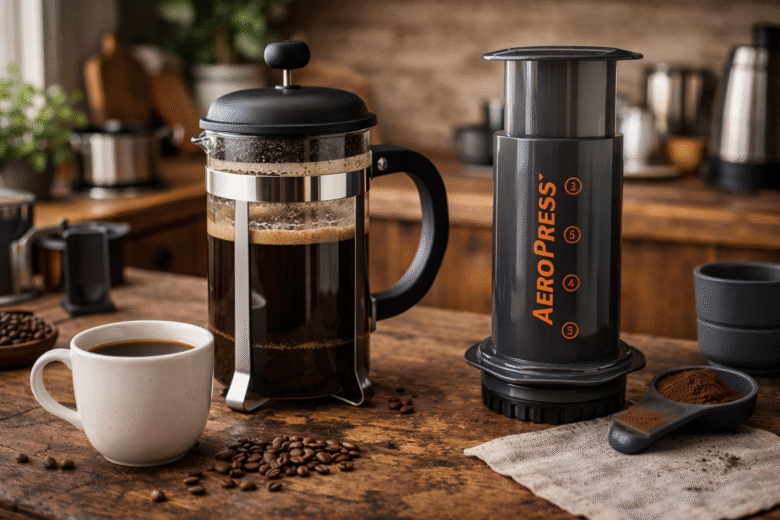
Two of the most popular brewing devices for home use are the French Press and the AeroPress. Both are compact, affordable, and capable of making great coffee. But they couldn’t be more different in style, flavor, and function.
This guide will help you figure out which one actually solves your morning struggles — so you can start your day with better coffee and less stress.
What Makes a Coffee Maker “Good” for Mornings?
To make mornings easier, a coffee maker should meet a few essential needs. First, it should be quick, so you’re not stuck waiting. Second, it must be easy to use, even when you’re groggy. Third, the flavor needs to be satisfying. Lastly, it should clean up quickly and not leave a mess.
We’ll compare the French Press and the AeroPress across all these factors to help you choose the one that fits your routine best.
1. Flavor Comparison: Bold or Clean?
Let’s start with the most important question — how does the coffee taste?
French Press: Deep and Heavy
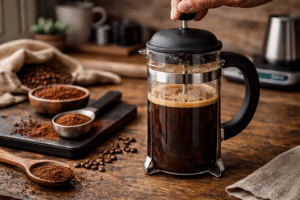
The French Press is known for producing full-bodied, rich coffee. It doesn’t use a paper filter, which means the natural oils and fine particles from the coffee remain in your cup. This creates a bold, earthy flavor that many people love.
If you like strong, intense coffee with a thicker texture, the French Press delivers that every time.
AeroPress: Smooth and Balanced
The AeroPress uses a paper or metal filter, which removes most fine particles and oils. This produces a cleaner cup with more brightness and less bitterness. It works especially well with medium and light roasts.
If you prefer a smoother and more balanced taste, the AeroPress might be a better fit.
2. Brew Time: Which One Is Faster?
Morning routines need efficiency. Here’s how long each method takes.
French Press
- Heating water: 1 to 2 minutes
- Brewing time: 4 minutes
- Press and pour: 30 seconds
Total: about 5 minutes.
AeroPress
- Heating water: 1 to 2 minutes
- Brewing time: 1 to 1.5 minutes
- Press: 10 seconds
Total: about 2 to 3 minutes.
The AeroPress is significantly faster, which can make a difference on a busy morning.
3. Ease of Use: Simplicity vs. Flexibility
Which one is easier for a beginner?
French Press: Straightforward
Using a French Press is simple. You add coffee grounds, pour hot water, wait four minutes, and then press the plunger. That’s it. No extra parts or confusing steps.
It’s ideal if you want a no-fuss, classic brewing experience.
AeroPress: More Versatile
The AeroPress is slightly more complex. It offers multiple brewing styles — including standard and inverted — and allows you to adjust brew time, grind size, and water ratio.
It’s great for those who want to experiment, but it might require a bit of learning at first. Once you find your favorite recipe, though, it becomes second nature.
4. Cleanup: Which One Is Less Messy?
Cleaning up is one of the most overlooked parts of brewing, but it matters — especially when you’re short on time.
French Press: Can Be Messy
Cleaning a French Press involves removing wet coffee grounds from the bottom of the carafe. You’ll usually need a spoon, and rinsing it thoroughly takes a bit of effort. If you’re in a hurry, this can feel like a chore.
AeroPress: Incredibly Easy
With the AeroPress, you just remove the cap, push the compact coffee puck into the trash, rinse, and you’re done. It’s one of the fastest cleanup routines of any coffee method.
For speed and convenience, the AeroPress wins easily.
5. Portability: At Home or On the Go?
Do you ever need to brew coffee while traveling, camping, or at work?
French Press
Traditional French Press models are made of glass or ceramic and aren’t ideal for travel. Some plastic versions exist, but they’re bulkier and not completely spill-proof.
AeroPress
The AeroPress is lightweight, durable, and compact. It was literally designed with travel in mind. You can toss it in a bag without worry, and it’s easy to use anywhere — from hotel rooms to campsites.
If portability matters, the AeroPress is the better option.
6. Cost Comparison
Both devices are affordable, but here’s what to expect.
French Press
- Entry-level models: $15 to $25
- Premium models: $30 to $80
- Requires coarse coffee grind
AeroPress
- Standard model: around $39
- Travel version (AeroPress Go): around $45
- Requires paper filters (or reusable metal filter)
Prices are close, but keep in mind that the AeroPress will have a small ongoing cost for filters unless you use a reusable one.
7. Serving Size: One Cup or More?
How many people are you brewing for?
French Press
A standard French Press brews 2 to 4 cups at once, making it great for couples or families. You can scale up the batch without sacrificing flavor.
AeroPress
The AeroPress is designed for single servings. While you can stretch it to make two small cups, it’s not ideal for multiple people. Making coffee for more than one person requires brewing multiple times.
If you often brew for more than one, the French Press is more practical.
8. Grinder Compatibility
What if you don’t own a grinder?
French Press
Requires a coarse grind, which most pre-ground coffees don’t provide. To get the best results, you’ll need a burr grinder that can produce a consistent coarse grind.
AeroPress
Works well with medium to fine grinds, making it compatible with most store-bought ground coffee. It’s more forgiving if you’re using basic or pre-ground beans.
If you don’t have a grinder yet, the AeroPress is the more beginner-friendly option.
9. Sustainability
If eco-friendliness is part of your lifestyle, here’s what to consider.
French Press
No disposable filters or capsules. It’s a zero-waste method as long as you compost your coffee grounds. One of the most sustainable ways to brew.
AeroPress
Uses paper filters, although they’re small and biodegradable. You can buy a reusable metal filter to eliminate this waste. The device is made of durable plastic that lasts for years.
French Press wins slightly here, but the AeroPress is still a low-waste option.
Summary Comparison Table
| Category | French Press | AeroPress |
|---|---|---|
| Flavor Style | Bold, full-bodied | Clean, smooth |
| Brew Time | 4–5 minutes | 2–3 minutes |
| Ease of Use | Very simple | More flexible |
| Cleanup | Messy | Very easy |
| Portability | Low | Very high |
| Price Range | $15–$80 | $39–$45 |
| Ideal Use | 2–4 cups | 1–2 cups |
| Grinder Friendly | Needs coarse grind | Accepts pre-ground |
| Sustainable | High | Medium to high |
Final Recommendation
If your biggest issues in the morning are time, cleanup, or brewing for yourself, the AeroPress is likely your best solution. It’s quick, easy to clean, and produces a smooth, reliable cup every time.
On the other hand, if you prioritize flavor richness, want to brew for two or more people, or value eco-friendliness, the French Press might serve you better.
Both are excellent tools, and both outperform traditional drip machines in flavor and control. Choosing the right one depends entirely on your routine, preferences, and priorities.
And if you ever find yourself wanting the best of both worlds, there’s no harm in owning both.

Nathan Scott is a passionate coffee enthusiast with years of experience exploring the world of beans, brews, and barista techniques. From home brewing tips to discovering the perfect roast, he shares practical advice to help coffee lovers elevate their daily cup. When he’s not testing new brewing methods, Nathan is visiting local cafés in search of unique flavors and stories. His goal? To make great coffee simple, enjoyable, and accessible for everyone.