Few things are more frustrating than preparing a fresh cup of coffee only to discover that it tastes sharp, sour, weak, or unpleasant.
Many people assume sour coffee automatically means the beans are bad, but in reality, sourness is usually caused by brewing problems rather than the coffee itself.
Understanding why coffee tastes sour is one of the most important steps toward improving brewing quality at home.
Professional baristas constantly adjust brewing variables to control acidity and create balanced extraction. Fortunately, even beginners can fix sour coffee with a few simple changes.
Sour coffee is often a sign that the brewing process failed to extract enough sweetness and balance from the coffee grounds. Once you understand how extraction works, fixing sourness becomes much easier.
This guide explains the most common causes of sour coffee and how to make your coffee smoother, sweeter, and more balanced every morning.
What Sour Coffee Actually Means
Not all acidity in coffee is bad.
Some coffees naturally contain bright and pleasant acidity that tastes:
- Fruity
- Juicy
- Vibrant
- Refreshing
High-quality light roast coffees often have balanced acidity similar to:
- Citrus
- Berries
- Apples
- Tropical fruits
However, unpleasant sour coffee feels very different.
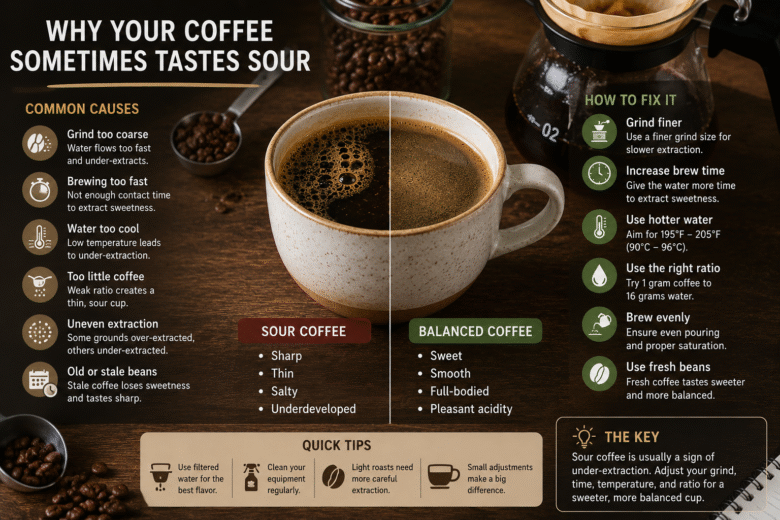
Bad sourness usually tastes:
- Sharp
- Thin
- Salty
- Underdeveloped
- Harsh
This unpleasant flavor is often caused by under-extraction.
What Is Under-Extraction?
Under-extraction happens when water fails to dissolve enough flavor compounds from the coffee grounds.
During brewing, water extracts different compounds in stages.
Early Extraction
Water first extracts:
- Acids
- Bright flavors
Mid Extraction
Later, water extracts:
- Sweetness
- Balance
- Rich aromas
Late Extraction
Toward the end, water extracts:
- Bitterness
- Heavy compounds
When brewing stops too early, sweetness never fully develops, leaving the coffee sour and unbalanced.
Grind Size Is One of the Biggest Causes
Grind size strongly affects extraction speed.
Grind Too Coarse
Coarse grounds extract slowly.
If the grind is too coarse, water moves through the coffee too quickly and fails to extract enough sweetness.
This usually creates coffee that tastes:
- Sour
- Weak
- Thin
How to Fix It
Try grinding slightly finer.
Smaller particles increase surface area and help water extract more flavor.
Small grind adjustments often create major improvements.
Brewing Time Matters
Extraction depends heavily on contact time between water and coffee grounds.
Brewing Too Quickly
If brewing finishes too fast, extraction remains incomplete.
This often causes:
- Sourness
- Weak body
- Sharp acidity
Better Brewing Times
French Press
About:
- 4 minutes
Pour Over
Usually:
- 2.5 to 4 minutes
AeroPress
Typically:
- 1 to 2 minutes
Espresso
Usually:
- 25 to 30 seconds
Extending brew time slightly may improve sweetness and balance.
Water Temperature Affects Sourness
Water that is too cool struggles to extract enough flavor from coffee grounds.
This commonly creates under-extraction.
Ideal Brewing Temperature
Most coffee tastes best between:
- 195°F to 205°F
- 90°C to 96°C
Water Too Cool Causes
- Sourness
- Weak extraction
- Thin flavor
If you suspect sour coffee, try slightly hotter water during brewing.
Light Roast Coffee Is Harder to Extract
Light roast coffee naturally extracts more slowly because the beans remain denser after roasting.
This means light roasts often require:
- Finer grinding
- Hotter water
- Longer extraction
Many beginners accidentally under-extract light roast coffee and mistake its brightness for poor quality.
Proper brewing helps reveal sweetness and complexity hidden inside the beans.
Using Too Little Coffee Can Cause Sourness
Weak brewing ratios may also create sour flavor.
Too little coffee sometimes causes poor extraction balance and thin body.
Reliable Starting Ratio
A balanced ratio is:
- 1 gram coffee
- 16 grams water
Example:
- 20 grams coffee
- 320 grams water
Consistent ratios improve flavor stability significantly.
Uneven Extraction Creates Confusing Flavor
Sometimes coffee tastes both sour and bitter at the same time.
This usually means extraction is uneven.
Some grounds become over-extracted while others remain under-extracted.
Uneven extraction may happen because of:
- Poor pouring technique
- Uneven grinding
- Weak saturation
- Channeling
Balanced brewing improves consistency.
Why Fresh Grinding Helps
Fresh grinding improves extraction because the coffee particles remain more consistent and aromatic.
Pre-ground coffee often extracts unevenly because it loses freshness quickly.
Fresh grinding helps preserve:
- Aroma
- Sweetness
- Flavor balance
Even inexpensive burr grinders can improve coffee quality dramatically.
Burr Grinders vs Blade Grinders
Blade grinders create uneven particles.
Some pieces become too fine while others stay too large.
This causes mixed extraction problems.
Burr grinders create more consistent particle sizes, improving:
- Flavor balance
- Sweetness
- Brewing reliability
Poor Water Quality Can Affect Flavor
Coffee is mostly water.
Poor water quality sometimes exaggerates acidity and unpleasant sharpness.
Filtered water often creates:
- Cleaner flavor
- Better sweetness
- More balanced extraction
Simple water improvements can noticeably reduce sourness.
Blooming Helps Improve Extraction
Fresh coffee releases carbon dioxide when hot water first contacts the grounds.
This process is called blooming.
Why Blooming Matters
Blooming helps:
- Improve saturation
- Reduce uneven extraction
- Enhance flavor balance
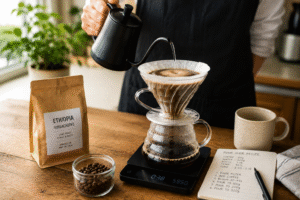
For pour over brewing:
- Add a small amount of water first
- Wait 30 to 45 seconds
- Continue brewing normally
This small step often improves flavor noticeably.
Espresso Sourness Is Very Common
Sour espresso usually indicates under-extraction.
Common causes include:
- Grind too coarse
- Shot too fast
- Water too cool
- Insufficient extraction time
Balanced espresso should contain sweetness alongside acidity.
Why Cheap Coffee Sometimes Tastes Sour
Cheap coffee may taste sour for several reasons:
- Poor roasting consistency
- Stale beans
- Weak extraction
- Poor grinding
However, proper brewing technique still improves many inexpensive coffees significantly.
Cleaning Equipment Helps More Than People Realize
Dirty equipment affects flavor balance.
Old coffee oils become rancid and interfere with extraction.
Equipment That Needs Cleaning
- Coffee makers
- French presses
- Grinders
- Espresso machines
- Pour over brewers
Clean equipment preserves smoother and more balanced flavor.
Learn to Taste the Difference Between Sour and Bright
One of the best coffee skills is learning how to identify flavor correctly.
Pleasant Acidity
Usually feels:
- Sweet
- Fruity
- Refreshing
Bad Sourness
Usually feels:
- Sharp
- Thin
- Salty
- Unpleasant
This distinction becomes easier with practice.
Why Consistency Fixes Many Coffee Problems
Professional baristas rely heavily on consistency.
Stable brewing habits create more predictable extraction.
Consistency includes:
- Same grind size
- Same ratio
- Same water temperature
- Same brewing time
This makes flavor adjustments easier and more effective.
Small Adjustments Create Big Improvements
Many people try changing everything at once when coffee tastes sour.
In reality, small adjustments work better.
Try changing only one variable at a time:
- Slightly finer grind
- Slightly hotter water
- Slightly longer brew time
This helps identify the real problem more clearly.
Better Coffee Comes From Better Extraction
Most sour coffee problems are actually extraction problems.
Balanced extraction reveals sweetness, aroma, and smoothness that remain hidden when brewing is incomplete.
Fresh beans, proper grind size, good water, and stable brewing habits all work together to create smoother and more enjoyable coffee.
Once you understand how extraction shapes flavor, coffee becomes much easier to improve consistently.
Sometimes the difference between sour coffee and balanced coffee is simply a few small brewing adjustments done with more intention and consistency.

Nathan Scott is a passionate coffee enthusiast with years of experience exploring the world of beans, brews, and barista techniques. From home brewing tips to discovering the perfect roast, he shares practical advice to help coffee lovers elevate their daily cup. When he’s not testing new brewing methods, Nathan is visiting local cafés in search of unique flavors and stories. His goal? To make great coffee simple, enjoyable, and accessible for everyone.