Not everyone wants to spend a fortune on premium coffee beans or expensive brewing equipment. The good news is that even affordable coffee can taste significantly better with the right brewing habits and a few simple adjustments.
Many people assume cheap coffee is automatically bad, but in reality, brewing technique often matters more than the price of the beans.
Water quality, grind size, freshness, extraction, and preparation habits can completely change how budget coffee tastes.
Professional baristas understand that small brewing improvements can dramatically reduce bitterness, improve smoothness, and create more balanced flavor — even when using inexpensive coffee.
This guide explains practical ways to improve cheap coffee at home and turn an average cup into something much more enjoyable without spending a lot of money.
Why Cheap Coffee Often Tastes Bitter
Many inexpensive coffees are roasted darker to hide imperfections in the beans.
Dark roasting can create:
- Smoky flavors
- Burnt notes
- Harsh bitterness
- Dry aftertaste
In addition, cheaper coffee is often:
- Pre-ground
- Older
- Poorly stored
- Exposed to oxygen for long periods
These factors reduce aroma and sweetness while increasing dull or bitter flavors.
The good news is that proper brewing can still improve the overall experience dramatically.
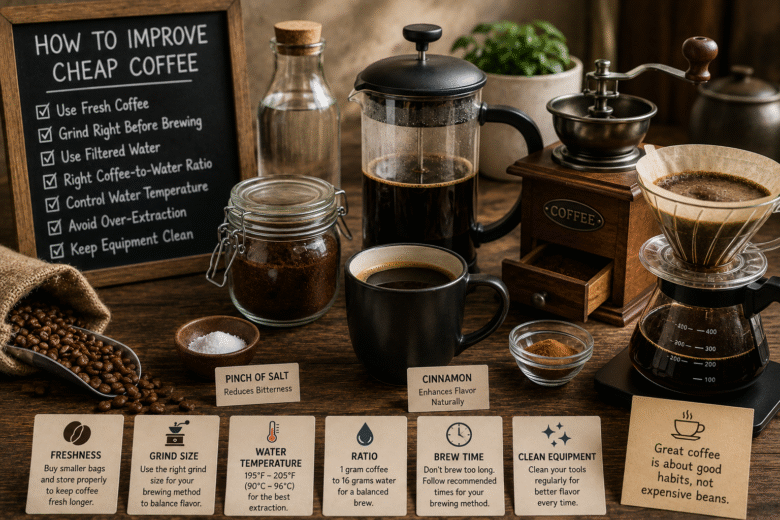
Freshness Makes a Huge Difference
One of the biggest problems with inexpensive coffee is age.
Coffee loses aroma and flavor gradually after roasting.
Even affordable coffee tastes noticeably better when it is fresher.
Buy Smaller Bags
Instead of buying very large coffee bags that sit for months, buy smaller quantities more often whenever possible.
This helps preserve:
- Aroma
- Sweetness
- Flavor balance
Fresh coffee always performs better during brewing.
Store Coffee Properly
Poor storage quickly damages coffee flavor.
Coffee should be protected from:
- Air
- Heat
- Moisture
- Sunlight
Better Storage Habits
Store coffee:
- In airtight containers
- In cool dry places
- Away from direct sunlight
Avoid leaving coffee bags open on kitchen counters.
Simple storage improvements already help preserve flavor noticeably.
Grind Coffee Fresh if Possible
Fresh grinding is one of the easiest ways to improve cheap coffee.
Pre-ground coffee loses aroma rapidly because oxygen reaches the exposed particles immediately.
Grinding just before brewing helps preserve:
- Sweetness
- Aroma
- Richness
- Flavor clarity
Even an affordable burr grinder can make a major difference.
Why Burr Grinders Help
Blade grinders chop coffee unevenly, creating inconsistent extraction.
Burr grinders create more uniform particles, which improves:
- Flavor balance
- Smoothness
- Brewing consistency
Better grinding often matters more than buying expensive beans.
Use Better Water
Coffee is mostly water, which means poor water quality damages flavor.
Tap water with heavy chlorine or mineral imbalance often creates harsh or flat coffee.
Filtered Water Improves Coffee
Filtered water usually creates:
- Cleaner flavor
- Better sweetness
- Reduced bitterness
- More balanced extraction
Simple filtration systems often improve cheap coffee immediately.
Water Temperature Matters More Than People Think
Many beginners pour boiling water directly onto coffee grounds.
This often causes over-extraction and bitterness.
Better Brewing Temperature
Most coffee tastes best between:
- 195°F to 205°F
- 90°C to 96°C
If using a normal kettle:
- Boil water
- Wait about 30 seconds
- Begin brewing
This small adjustment often reduces harsh bitterness dramatically.
Use the Right Coffee-to-Water Ratio
Many people accidentally make cheap coffee taste worse by using inconsistent measurements.
Too much coffee may create overwhelming bitterness.
Too little coffee often tastes weak and unpleasant.
Reliable Starting Ratio
A good starting point is:
- 1 gram coffee
- 16 grams water
Example:
- 20 grams coffee
- 320 grams water
Balanced ratios improve extraction consistency.
Avoid Over-Extraction
One of the biggest causes of bitter cheap coffee is over-extraction.
When water extracts too many compounds from the grounds, unpleasant flavors dominate.
Common Causes of Over-Extraction
- Water too hot
- Brewing too long
- Grind too fine
Reducing extraction slightly often creates smoother flavor.
Grind Size Makes a Big Difference
Cheap coffee often improves significantly with proper grind size.
Grind Too Fine
Coffee may taste:
- Bitter
- Harsh
- Muddy
Grind Too Coarse
Coffee may taste:
- Weak
- Sour
- Thin
Correct grind size helps balance flavor even with inexpensive beans.
Brewing Methods That Improve Cheap Coffee
Some brewing methods naturally help cheap coffee taste smoother.
French Press
French press brewing creates fuller body and richer texture, which helps mask thin or stale flavors.
AeroPress
The AeroPress is excellent for reducing bitterness and improving sweetness.
Its short brewing time helps avoid harsh extraction.
Pour Over
Pour over brewing highlights clarity but may expose flaws more easily if the coffee quality is very low.
Drip Coffee Makers
Good drip coffee makers still produce enjoyable coffee when paired with fresh grinding and proper ratios.
Add a Small Pinch of Salt
A tiny pinch of salt can help reduce bitterness in overly harsh coffee.
This works because salt suppresses bitter flavor perception slightly.
Only use a very small amount.
Too much salt ruins the coffee completely.
Cinnamon Can Improve Flavor Naturally
Some people enjoy adding cinnamon during brewing.
Cinnamon may help create:
- Warmer aroma
- Sweeter perception
- Reduced bitterness
It also pairs naturally with coffee’s chocolate and caramel notes.
Avoid Burning the Coffee
Leaving brewed coffee sitting on hot plates for long periods creates stale and burnt flavor.
This is common with old drip coffee makers.
Freshly brewed coffee always tastes better than overheated coffee that sits for hours.
Clean Equipment Regularly
Old coffee oils become rancid over time and negatively affect flavor.
Dirty equipment often makes cheap coffee taste far worse.
Equipment That Needs Cleaning
- Coffee makers
- French presses
- Grinders
- Moka pots
- Reusable filters
Clean equipment helps preserve smoother and fresher flavor.
Add Milk Strategically
Milk can soften bitterness and improve texture in inexpensive coffee.
Whole milk often creates:
- Richer mouthfeel
- Better sweetness
- Smoother flavor
However, improving the brewing itself should always come first.
Sweeteners Are Not the Only Solution
Many people add excessive sugar trying to hide unpleasant coffee flavor.
While sweeteners can help, improving extraction usually creates better results naturally.
Balanced coffee often requires far less sugar.
Try Medium Roasts Instead of Very Dark Roasts
Extremely dark coffee often tastes more bitter and smoky.
Medium roasts usually provide:
- Better sweetness
- More balance
- Less harshness
Even inexpensive medium roast coffee may taste smoother than ultra-dark blends.
Why Consistency Improves Cheap Coffee
Professional cafés focus heavily on consistency because repeatable brewing creates reliable results.
Simple habits improve flavor dramatically:
- Same measurements
- Same brew time
- Same grind size
- Same water temperature
Consistency helps cheap coffee taste more balanced every day.
Cheap Coffee Can Still Be Enjoyable
Coffee does not need to be expensive to taste good.
Many brewing improvements cost little or nothing:
- Better water
- Fresh grinding
- Proper ratios
- Correct temperature
- Cleaner equipment
These small habits often matter more than buying premium beans.
Better Coffee Is About Balance
The goal is not perfection. The goal is creating smoother, more enjoyable coffee with what you already have.
Freshness, extraction, water quality, and consistency work together to improve flavor far more than most people realize.
Even inexpensive coffee can become richer, cleaner, and more satisfying when brewed carefully.
Sometimes the difference between harsh coffee and enjoyable coffee is simply a few smarter brewing habits each morning.

Nathan Scott is a passionate coffee enthusiast with years of experience exploring the world of beans, brews, and barista techniques. From home brewing tips to discovering the perfect roast, he shares practical advice to help coffee lovers elevate their daily cup. When he’s not testing new brewing methods, Nathan is visiting local cafés in search of unique flavors and stories. His goal? To make great coffee simple, enjoyable, and accessible for everyone.