Pour over coffee has become one of the most popular brewing methods among coffee enthusiasts because it offers exceptional control over flavor, aroma, and extraction.
Unlike automatic coffee machines, pour over brewing allows you to guide every step of the process, creating coffee that tastes cleaner, smoother, and more balanced.
Many beginners assume pour over coffee is complicated or requires expensive equipment. In reality, it is one of the simplest ways to improve coffee quality at home.
With a few affordable tools and a basic understanding of brewing fundamentals, anyone can make café-quality coffee in their own kitchen.
What makes pour over coffee special is the clarity it brings to flavor. The method highlights sweetness, aroma, and subtle tasting notes that often disappear in other brewing styles.
Whether you enjoy chocolatey medium roasts or fruity light roasts, pour over brewing helps reveal more character in every cup.
This beginner-friendly guide explains exactly how to brew better pour over coffee step by step while avoiding the most common mistakes.
What Is Pour Over Coffee?
Pour over coffee is a manual brewing method where hot water is slowly poured over coffee grounds inside a filter.
As the water passes through the grounds, it extracts flavor compounds before dripping into a cup or carafe below.
Unlike immersion brewing methods such as French press, pour over brewing gives greater control over:
- Water flow
- Brewing speed
- Extraction time
- Saturation
- Flavor balance
This extra control is why many professional baristas love pour over coffee.
Why Beginners Love Pour Over Brewing
Pour over coffee combines simplicity with excellent flavor quality.
Many beginners appreciate that it:
- Requires minimal equipment
- Produces clean flavor
- Encourages consistency
- Helps develop brewing skills
- Works well with many coffee styles
It also creates a more relaxing coffee routine that many people genuinely enjoy each morning.
Basic Equipment You Need
One reason pour over coffee is so popular is that the equipment is affordable and accessible.
Pour Over Dripper
Popular options include:
- Hario V60
- Kalita Wave
- Origami Dripper
- Chemex
Plastic drippers are inexpensive and work extremely well for beginners.
Paper Filters
Paper filters remove many oils and fine particles, creating cleaner and brighter coffee.
Always use filters designed for your specific dripper.
Gooseneck Kettle
A gooseneck kettle helps control pouring speed and direction.
Precise pouring improves extraction consistency significantly.
While helpful, beginners can still make excellent coffee without expensive kettles.
Coffee Grinder
Fresh grinding dramatically improves flavor.
Burr grinders produce more consistent particles than blade grinders and help create smoother extraction.
Scale
A kitchen scale improves consistency by allowing accurate coffee and water measurements.
Consistency is one of the biggest keys to better coffee.
Choosing the Right Coffee Beans
Fresh coffee beans make a huge difference in pour over brewing.
Because pour over methods highlight flavor clarity so strongly, stale coffee becomes very noticeable.
Medium and Light Roasts Work Especially Well
Pour over brewing often emphasizes:
- Fruity notes
- Floral aromas
- Sweetness
- Bright acidity
- Complex flavors
Fresh beans with visible roast dates usually provide much better results than older supermarket coffee.
The Best Grind Size for Pour Over Coffee
Grind size strongly affects extraction speed.
Ideal Grind Size
Most pour over methods work best with:
- Medium-fine grind
- Slightly finer than regular drip coffee
The texture should resemble:
- Fine sand
- Table salt
If Grind Is Too Fine
Coffee may taste:
- Bitter
- Harsh
- Muddy
If Grind Is Too Coarse
Coffee may taste:
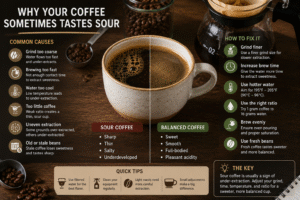
- Sour
- Weak
- Watery
Small grind adjustments create noticeable flavor differences.
Water Temperature Matters
Professional baristas carefully control water temperature because it strongly affects extraction.
Ideal Brewing Temperature
Most pour over coffee tastes best between:
- 195°F to 205°F
- 90°C to 96°C
If you do not own a temperature-controlled kettle, simply boil water and let it rest for about 30 seconds before brewing.
This simple adjustment often improves flavor immediately.
Coffee-to-Water Ratio
A reliable starting point for beginners is:
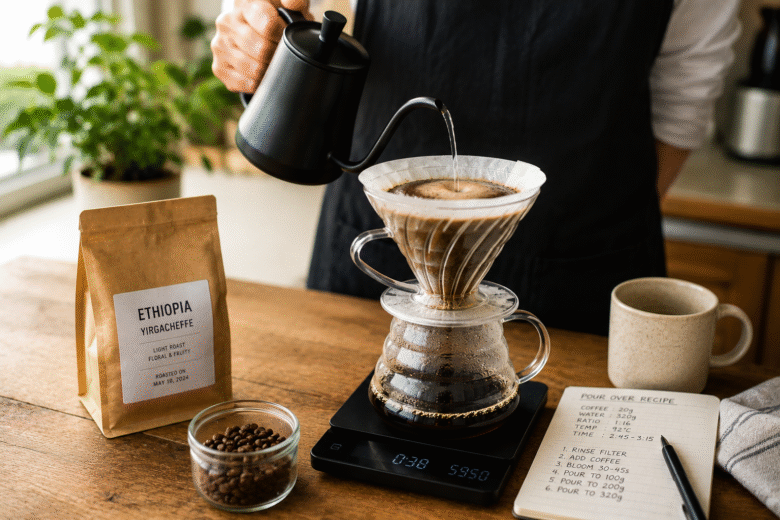
- 1 gram of coffee for every 16 grams of water
Example recipe:
- 20 grams of coffee
- 320 grams of water
This creates balanced strength for most people.
You can later adjust according to personal preference.
Step-by-Step Pour Over Brewing Guide
Step 1: Heat the Water
Bring water close to boiling.
Allow it to cool slightly before brewing if necessary.
Step 2: Rinse the Filter
Place the paper filter inside the dripper and rinse it with hot water.
This helps:
- Remove paper flavor
- Preheat the dripper
- Improve extraction consistency
Discard the rinse water afterward.
Step 3: Add Freshly Ground Coffee
Place ground coffee into the filter.
Gently shake the dripper to level the grounds evenly.
Even coffee beds improve extraction consistency.
Step 4: Start the Bloom
Pour a small amount of water over the coffee grounds until all grounds become saturated.
Wait about 30 to 45 seconds.
This process is called blooming.
Blooming releases trapped carbon dioxide and helps improve extraction quality.
Fresh coffee usually blooms more actively.
Step 5: Begin Main Pour
Slowly pour water in small circular motions.
Try to maintain steady flow without pouring aggressively.
Avoid pouring directly onto the filter walls whenever possible.
Controlled pouring creates more even extraction.
Step 6: Continue Pouring Gradually
Add water in stages instead of all at once.
Maintaining stable water levels helps improve brewing consistency.
Most pour over brews finish within:
- 2.5 to 4 minutes
Step 7: Let Coffee Finish Dripping
Allow the final water to pass fully through the grounds.
Once dripping slows significantly, remove the dripper and enjoy the coffee.
Common Pour Over Mistakes Beginners Make
Even simple brewing methods can produce disappointing coffee if technique is inconsistent.
Pouring Too Quickly
Fast pouring often causes uneven extraction.
This may create:
- Weak flavor
- Sourness
- Poor balance
Slow and controlled pouring produces better results.
Using Incorrect Grind Size
Wrong grind size is one of the biggest causes of poor pour over coffee.
Too fine:
- Bitter coffee
- Slow brewing
Too coarse:
- Weak coffee
- Fast brewing
Always adjust based on taste and brew time.
Ignoring Brew Time
Pour over extraction depends heavily on timing.
Brewing Too Fast
Usually causes under-extraction.
Coffee tastes:
- Sour
- Thin
- Weak
Brewing Too Slowly
Usually causes over-extraction.
Coffee tastes:
- Bitter
- Dry
- Harsh
Balanced brew times help create smoother flavor.
Using Old Coffee Beans
Freshness matters tremendously in pour over coffee.
Because the brewing method highlights subtle flavors so clearly, stale coffee often tastes flat and lifeless.
Freshly roasted beans create much more aroma and sweetness.
Why Pour Over Coffee Tastes Cleaner
Paper filters trap many oils and fine particles during brewing.
This creates:
- Cleaner body
- Brighter flavor
- More clarity
- Lighter texture
Many people enjoy pour over coffee because individual tasting notes become easier to recognize.
Improving Your Pouring Technique
Beginners often worry too much about perfect pouring patterns.
The most important goals are:
- Slow pouring
- Even saturation
- Consistent flow
As confidence improves, pouring naturally becomes smoother and more controlled.
Light Roast Coffee and Pour Over Brewing
Pour over methods are especially popular for light roast coffee because they highlight delicate flavors beautifully.
Common tasting notes include:
- Citrus
- Berry
- Honey
- Tea-like texture
- Floral aromas
This flavor clarity is one reason specialty coffee shops frequently use pour over brewing.
Cleaning Equipment Matters
Coffee oils and residue build up over time and affect flavor quality.
Regular cleaning helps preserve:
- Freshness
- Aroma
- Flavor clarity
Rinse equipment thoroughly after every brew and deep clean periodically.
Why Pour Over Brewing Improves Coffee Skills
Pour over coffee teaches beginners important brewing fundamentals:
- Extraction control
- Brewing ratios
- Grind adjustment
- Water management
- Consistency
Many coffee enthusiasts develop stronger brewing instincts through regular pour over practice.
Better Pour Over Coffee Comes From Practice
Pour over brewing may seem intimidating at first, but improvement happens surprisingly quickly.
Small adjustments in grind size, pouring speed, water temperature, and brew time gradually create smoother and more balanced coffee.
The beauty of pour over coffee is not only the flavor itself, but also the experience of slowing down and becoming more intentional during the brewing process.
With fresh beans, consistent technique, and a little patience, beginners can create coffee at home that rivals many specialty cafés.
Sometimes the best coffee moments come from the simple ritual of carefully pouring hot water over freshly ground coffee on a quiet morning.

Nathan Scott is a passionate coffee enthusiast with years of experience exploring the world of beans, brews, and barista techniques. From home brewing tips to discovering the perfect roast, he shares practical advice to help coffee lovers elevate their daily cup. When he’s not testing new brewing methods, Nathan is visiting local cafés in search of unique flavors and stories. His goal? To make great coffee simple, enjoyable, and accessible for everyone.