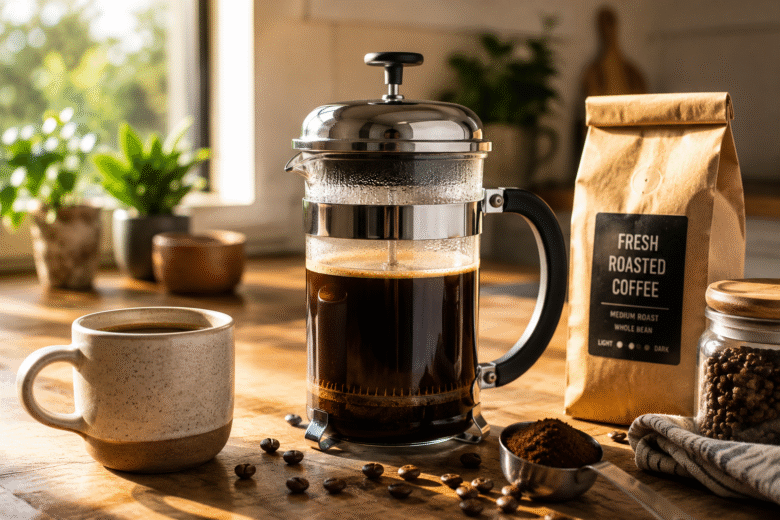
French press coffee remains one of the most popular brewing methods for people who want bold flavor, rich texture, and a simple brewing process without expensive equipment.
Unlike paper-filter brewing methods, the French press allows natural coffee oils and fine particles to remain in the cup, creating a deeper and fuller coffee experience.
Many coffee lovers appreciate French press brewing because it combines simplicity with impressive flavor potential.
With only a few adjustments, beginners can dramatically improve the smoothness, richness, and consistency of their homemade coffee.
Although the French press is easy to use, small mistakes can quickly lead to bitter, muddy, or weak coffee.
Understanding grind size, brewing time, water temperature, and proper technique makes a huge difference in flavor quality.
This guide explains how to make richer and smoother French press coffee at home while avoiding the most common brewing mistakes.
Why French Press Coffee Tastes Different
French press brewing uses a method called immersion brewing. Instead of water quickly passing through coffee grounds, the coffee remains fully submerged during the brewing process.
This immersion creates:
- Fuller body
- Richer texture
- Stronger aroma
- More natural oils in the cup
Paper filters used in drip coffee remove many oils and fine particles. French press metal filters allow these compounds to remain, producing a heavier and more satisfying mouthfeel.
This is why French press coffee often tastes deeper and richer than standard drip coffee.
Choosing the Right Coffee Beans
Good French press coffee starts with fresh beans.
Because French press brewing highlights body and texture so strongly, stale coffee becomes very noticeable. Freshly roasted beans produce more sweetness, aroma, and flavor complexity.
Medium and Dark Roasts Work Very Well
Many people enjoy medium or dark roast coffee in a French press because these roasts complement the method’s rich texture.
Common flavor notes include:
- Chocolate
- Caramel
- Nuts
- Brown sugar
- Cocoa
However, lighter roasts can also work beautifully when brewed correctly.
Why Fresh Grinding Matters
Grinding coffee immediately before brewing dramatically improves flavor.
Pre-ground coffee loses aroma and freshness quickly because oxygen interacts with the exposed particles.
Fresh grinding helps preserve:
- Sweetness
- Aroma
- Flavor clarity
- Natural oils
Even affordable grinders can noticeably improve French press coffee quality.
The Best Grind Size for French Press
French press brewing requires coarse coffee grounds.
Ideal Texture
The grounds should resemble:
- Coarse sea salt
- Cracked peppercorns
Coarse grounds slow extraction and help prevent bitterness.
Problems With Fine Grounds
Using fine grounds often creates:
- Muddy texture
- Excess sediment
- Bitter flavor
- Over-extraction
Fine particles also pass through the metal filter more easily and create unpleasant texture in the cup.
Consistent coarse grinding is one of the most important factors in making smoother French press coffee.
Water Temperature Makes a Huge Difference
Many beginners accidentally ruin French press coffee by using boiling water directly on the grounds.
Excessively hot water extracts bitter compounds too aggressively.
Ideal Water Temperature
French press coffee usually tastes best between:
- 195°F to 200°F
- 90°C to 93°C
If you do not own a temperature-controlled kettle, simply boil water and allow it to rest for about 30 seconds before pouring.
This small adjustment often creates smoother flavor immediately.
The Ideal Coffee-to-Water Ratio
Consistency matters more than perfection.
A reliable starting point for French press brewing is:
- 1 gram of coffee for every 15 to 17 grams of water
For beginners, a practical recipe is:
- 30 grams of coffee
- 500 milliliters of water
You can later adjust strength according to personal taste.
Step-by-Step French Press Brewing Guide
Step 1: Preheat the French Press
Rinse the French press with hot water before brewing.
Preheating helps maintain stable brewing temperature and improves extraction consistency.
Step 2: Add Coarse Coffee Grounds
Place freshly ground coffee into the empty French press.
Level the grounds gently for even extraction.
Step 3: Start the Bloom
Pour a small amount of hot water over the grounds until they become saturated.
Wait about 30 to 45 seconds.
This process, called blooming, allows trapped carbon dioxide to escape and improves extraction quality.
Step 4: Add Remaining Water
Slowly pour the remaining water evenly over the coffee.
Avoid aggressive pouring that disturbs the grounds excessively.
Step 5: Stir Gently
Use a spoon or wooden stirrer to lightly mix the coffee and water.
Gentle stirring helps ensure even extraction.
Step 6: Place Lid and Wait
Place the plunger lid on top without pressing down.
Allow the coffee to steep for about 4 minutes.
This timing usually creates balanced flavor.
Step 7: Press Slowly
Push the plunger downward slowly and steadily.
Pressing too quickly can disturb the grounds and create bitterness.
Smooth and controlled pressing produces cleaner texture.
Common French Press Mistakes That Ruin Flavor
Even simple brewing methods can produce poor coffee when mistakes happen repeatedly.
Using the Wrong Grind Size
Fine grounds are one of the most common French press problems.
This creates:
- Muddy coffee
- Excess bitterness
- Heavy sediment
Always use coarse grounds whenever possible.
Brewing Too Long
Over-steeping increases bitterness and harshness.
Four minutes is usually a strong starting point.
If coffee tastes bitter, try slightly shorter brew times.
Leaving Coffee in the French Press
Many people allow brewed coffee to remain sitting with the grounds after pressing.
Extraction continues even after plunging, which can quickly create bitterness.
Better Option
Transfer coffee into another container after brewing if you do not plan to drink it immediately.
Using Poor Water Quality
Coffee is mostly water, so poor water quality negatively affects flavor.
Filtered water usually creates cleaner and smoother coffee.
Strong chlorine taste or excessive minerals can hide sweetness and complexity.
How to Make French Press Coffee Smoother
Many people assume French press coffee must always taste heavy or harsh. In reality, proper technique creates surprisingly smooth flavor.
Tips for Smoother French Press Coffee
- Use fresh beans
- Grind coarsely
- Avoid boiling water
- Brew for about 4 minutes
- Press slowly
- Use filtered water
- Clean equipment regularly
Small adjustments create major improvements.
Why French Press Coffee Feels Richer
French press coffee contains more natural oils than paper-filtered coffee.
These oils contribute to:
- Fuller body
- Silkier texture
- Longer aftertaste
- Richer mouthfeel
This heavier texture is one reason French press coffee feels more satisfying to many coffee drinkers.
Experimenting With Brew Time
French press brewing is flexible.
Once you understand the basics, you can experiment with different steeping times.
Shorter Brew Time
May create:
- Lighter body
- Brighter acidity
- Cleaner flavor
Longer Brew Time
May create:
- Stronger body
- More intensity
- Increased bitterness
Adjusting brew time helps personalize flavor preferences.
Cleaning Your French Press Properly
Coffee oils build up quickly inside French presses.
Over time, these oils become rancid and negatively affect flavor.
Cleaning Tips
- Rinse immediately after use
- Wash thoroughly with warm water
- Clean metal filter carefully
- Remove trapped grounds completely
Regular cleaning preserves cleaner flavor and better aroma.
French Press vs Drip Coffee
Many beginners wonder why French press coffee tastes so different from drip coffee.
French Press
- Richer body
- More oils
- Fuller texture
- Heavier mouthfeel
Drip Coffee
- Cleaner flavor
- Lighter texture
- Less sediment
- Brighter clarity
Neither method is objectively better. The best choice depends on personal preference.
Choosing the Right French Press
French presses come in many materials and sizes.
Glass French Press
Popular because:
- Attractive appearance
- Easy visibility
- Affordable price
Stainless Steel French Press
Benefits include:
- Better heat retention
- Greater durability
- Travel-friendly design
Both options can produce excellent coffee when used properly.
Why French Press Is Great for Beginners
French press brewing teaches important coffee fundamentals without requiring advanced equipment.
Beginners quickly learn:
- Extraction basics
- Brewing ratios
- Water temperature control
- Grind size importance
The process is simple enough to feel approachable while still producing café-quality coffee.
Better French Press Coffee Comes From Better Habits
Excellent French press coffee does not require expensive tools or professional barista experience.
Small improvements in technique often create dramatic flavor differences.
Fresh beans, proper grind size, balanced brewing time, and controlled water temperature work together to create richer and smoother coffee at home.
The French press remains one of the best brewing methods for coffee lovers who enjoy bold flavor, satisfying texture, and a relaxing brewing routine.
With practice and consistency, this simple brewing method can produce some of the most enjoyable coffee you will ever make at home.

Nathan Scott is a passionate coffee enthusiast with years of experience exploring the world of beans, brews, and barista techniques. From home brewing tips to discovering the perfect roast, he shares practical advice to help coffee lovers elevate their daily cup. When he’s not testing new brewing methods, Nathan is visiting local cafés in search of unique flavors and stories. His goal? To make great coffee simple, enjoyable, and accessible for everyone.