One of the most important factors in brewing excellent coffee is grind size.
Many people focus heavily on coffee beans or brewing equipment while completely overlooking how much the grind affects flavor, extraction, texture, and consistency.
Even premium coffee beans can produce disappointing coffee when the grind size is incorrect. Coffee that tastes bitter, weak, sour, muddy, or flat is often the result of poor grinding rather than poor beans.
Professional baristas carefully adjust grind size for every brewing method because extraction depends heavily on how quickly water moves through coffee grounds.
Understanding this simple concept can dramatically improve homemade coffee without requiring expensive equipment.
This guide explains the best grind size for every major coffee brewing method and shows how beginners can improve flavor consistency through better grinding habits.
Why Grind Size Matters So Much
Coffee brewing works through extraction. Hot water dissolves flavor compounds from coffee grounds during contact.
Grind size changes how much surface area is exposed to water.
Fine Grounds
Fine coffee grounds expose more surface area.
This means:
- Faster extraction
- Stronger flavor
- Higher risk of bitterness
Coarse Grounds
Coarse grounds expose less surface area.
This means:
- Slower extraction
- Lighter flavor
- Higher risk of sourness or weakness
Each brewing method requires a specific extraction speed, which is why grind size must match the brewing technique.
What Happens When Grind Size Is Wrong
Incorrect grind size creates unbalanced extraction.
Grind Too Fine
Coffee may taste:
- Bitter
- Harsh
- Dry
- Muddy
- Overwhelming
Grind Too Coarse
Coffee may taste:
- Weak
- Sour
- Watery
- Flat
- Underdeveloped
Learning to recognize these flavor patterns helps improve brewing much faster.
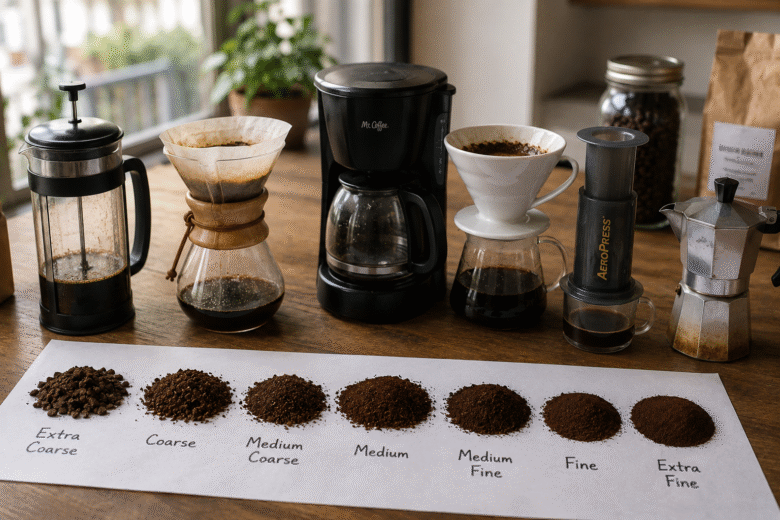
Understanding Coffee Grind Categories
Coffee grind sizes are usually divided into several basic categories.
Extra Coarse
Texture similar to peppercorns or sea salt.
Used for:
- Cold brew
- Cowboy coffee
Coarse
Texture similar to rough kosher salt.
Used for:
- French press
- Percolators
Medium-Coarse
Texture slightly smoother than coarse sand.
Used for:
- Chemex
- Some pour over methods
Medium
Texture similar to regular sand.
Used for:
- Drip coffee makers
- Flat-bottom pour over brewers
Medium-Fine
Texture between sand and table salt.
Used for:
- Cone-shaped pour over brewers
- AeroPress
Fine
Texture similar to table salt or sugar.
Used for:
- Espresso
- Moka pot
Extra Fine
Texture similar to flour or powdered sugar.
Used for:
- Turkish coffee
Best Grind Size for French Press
French press brewing works best with coarse grounds.
Because coffee steeps directly in water for several minutes, fine grounds would over-extract quickly and pass through the metal filter.
Ideal French Press Grind
- Coarse
- Even particle size
- Similar to coarse sea salt
Problems With Fine Grounds in French Press
- Muddy texture
- Excess bitterness
- Sediment in cup
- Over-extraction
A coarse grind helps maintain smoother and cleaner flavor.
Best Grind Size for Pour Over Coffee
Pour over coffee requires more precision because water flows directly through the grounds.
Different pour over brewers often perform best with slightly different grind sizes.
Cone-Shaped Brewers
Examples:
- Hario V60
- Origami Dripper
Best grind:
- Medium-fine
Flat-Bottom Brewers
Examples:
- Kalita Wave
- Fellow Stagg
Best grind:
- Medium
Signs Grind Needs Adjustment
If pour over coffee tastes bitter:
- Grind slightly coarser
If coffee tastes sour or weak:
- Grind slightly finer
Small adjustments create noticeable differences.
Best Grind Size for Drip Coffee Makers
Most automatic drip coffee makers work best with medium grounds.
This grind allows water to flow at a balanced speed during brewing.
Ideal Texture
- Similar to regular sand
Common Problems
Too fine:
- Bitter coffee
- Overflowing filters
Too coarse:
- Weak flavor
- Thin body
Consistent medium grinding usually improves drip coffee significantly.
Best Grind Size for Espresso
Espresso requires very fine coffee grounds because brewing happens rapidly under pressure.
Water passes through the coffee in about 25 to 30 seconds, so fine grounds are necessary for proper extraction.
Ideal Espresso Grind
- Fine
- Powdery but not clumping
- Slightly finer than table salt
Espresso Is Extremely Sensitive
Small grind changes dramatically affect espresso quality.
Too fine:
- Slow extraction
- Bitter shots
Too coarse:
- Fast extraction
- Sour shots
Professional espresso brewing relies heavily on grind precision.
Best Grind Size for AeroPress
The AeroPress is versatile and works with multiple grind styles depending on the recipe.
Most beginners achieve balanced results using medium-fine grounds.
Typical AeroPress Grind
- Medium-fine
- Slightly finer than drip coffee
Why AeroPress Is Flexible
Because AeroPress uses pressure and short brew times, it allows experimentation with different grind sizes.
Many coffee enthusiasts enjoy adjusting recipes to match personal taste preferences.
Best Grind Size for Cold Brew
Cold brew requires very coarse grounds because brewing lasts many hours.
Fine grounds over-extract during long steeping times and create unpleasant bitterness.
Ideal Cold Brew Grind
- Extra coarse
- Large particles
- Similar to cracked peppercorns
Benefits of Coarse Grinding
- Smoother flavor
- Lower bitterness
- Easier filtering
- Cleaner texture
Cold brew highlights how grind size directly affects extraction speed.
Best Grind Size for Moka Pot
Moka pots require fine grounds but not quite as fine as espresso.
Ideal Moka Pot Grind
- Fine
- Slightly coarser than espresso
Too fine:
- Excess pressure
- Bitter flavor
Too coarse:
- Weak coffee
- Poor extraction
Balanced grinding helps produce richer stovetop coffee.
Best Grind Size for Turkish Coffee
Turkish coffee uses extremely fine grinding.
The coffee dissolves almost completely into the water during brewing.
Ideal Turkish Grind
- Powder-like
- Extremely fine
- Similar to flour
Very few standard grinders produce true Turkish grind consistency without specialized settings.
Why Consistency Matters More Than Perfection
Professional baristas value grind consistency more than simply choosing the “correct” grind category.
Uneven grinding creates uneven extraction because small particles extract faster than large particles.
Inconsistent Grinding Causes
- Mixed bitterness and sourness
- Muddy flavor
- Poor balance
- Reduced clarity
Consistent particles produce cleaner and more balanced coffee.
Blade Grinders vs Burr Grinders
Many beginners use blade grinders because they are inexpensive.
However, blade grinders chop coffee unevenly and create inconsistent particle sizes.
Blade Grinder Problems
- Uneven extraction
- Excess dust particles
- Reduced flavor clarity
Burr Grinder Advantages
Burr grinders crush coffee more evenly.
Benefits include:
- Better consistency
- Cleaner flavor
- Improved extraction
- Greater brewing control
Even affordable burr grinders usually improve coffee quality significantly.
Adjusting Grind Based on Taste
One of the best coffee skills is learning how to adjust grind size based on flavor feedback.
If Coffee Tastes Bitter
Try:
- Grinding coarser
- Reducing brew time
If Coffee Tastes Sour
Try:
- Grinding finer
- Increasing extraction slightly
Small adjustments often create major improvements.
Fresh Grinding Improves Flavor
Grinding coffee immediately before brewing preserves aroma and freshness.
Pre-ground coffee loses flavor quickly because oxygen interacts with exposed coffee particles.
Fresh grinding enhances:
- Aroma
- Sweetness
- Complexity
- Overall freshness
This is one of the easiest ways to improve homemade coffee dramatically.
Why Grind Size Is One of the Most Important Coffee Skills
Many beginners underestimate how much grind size affects brewing quality.
In reality, grind adjustment is one of the fastest ways to improve coffee flavor consistently.
Professional baristas constantly modify grind settings throughout the day because factors like humidity, roast level, and bean freshness influence extraction behavior.
At home, understanding the relationship between grind size and brewing method creates much greater brewing control.
Better Coffee Starts With Better Grinding
Excellent coffee is not only about premium beans or expensive equipment. Proper grinding plays a huge role in flavor balance, aroma, body, and consistency.
Matching grind size to brewing method helps create smoother extraction and better-tasting coffee with almost any setup.
Whether using a French press, pour over, espresso machine, AeroPress, or drip brewer, proper grind size helps unlock the full potential hidden inside coffee beans.
Sometimes the difference between average coffee and exceptional coffee is simply adjusting the grinder one small step in the right direction.

Nathan Scott is a passionate coffee enthusiast with years of experience exploring the world of beans, brews, and barista techniques. From home brewing tips to discovering the perfect roast, he shares practical advice to help coffee lovers elevate their daily cup. When he’s not testing new brewing methods, Nathan is visiting local cafés in search of unique flavors and stories. His goal? To make great coffee simple, enjoyable, and accessible for everyone.