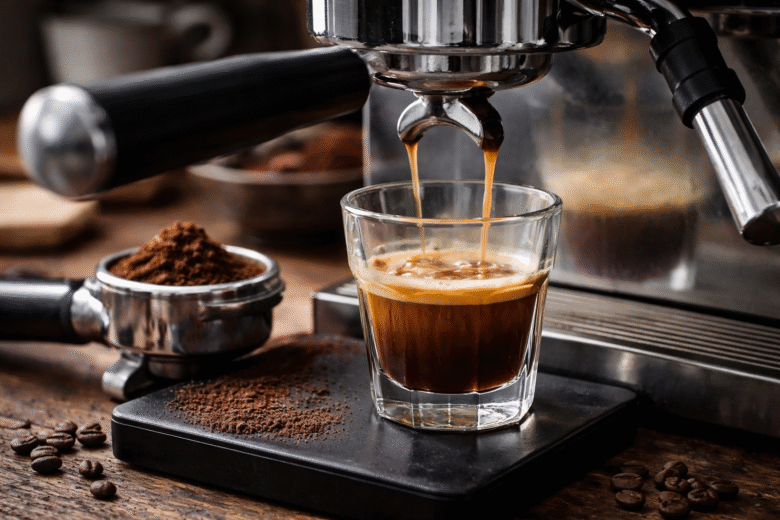
Espresso is meant to be rich, balanced, and complex. When it’s made right, it carries bold flavor, smooth crema, and a satisfying finish.
But for many home brewers, the reality is far from that. One of the most common complaints from beginners is this: “My espresso tastes sour. What am I doing wrong?”
The truth is, sour espresso isn’t just a matter of taste preference. It’s a clear sign that something in your process — or your equipment — is off.
In this article, we’ll break down the real reasons your espresso tastes sour and how your gear might be part of the problem.
Whether you use a manual machine, semi-automatic, or even a fancy all-in-one unit, understanding how each piece of your setup affects the final cup is essential to solving this issue.
What Does “Sour” Espresso Mean?
Sour espresso has a sharp, acidic taste that lacks sweetness or depth. It might remind you of lemon juice, vinegar, or under-ripe fruit. Sometimes it can feel thin or overly bright.
This is not the kind of pleasant acidity that high-quality beans offer. Instead, it’s an unbalanced and unpleasant result of improper extraction.
When espresso tastes sour, it usually means under-extraction — your coffee was brewed too quickly or unevenly, and the rich sugars and oils that balance the flavor never made it into your cup.
But the reasons behind this issue are not always obvious. Let’s look at how your grinder, machine, temperature, pressure, and tamping might be contributing to the problem.
1. Your Grind Size Is Too Coarse
Grind size is one of the most critical factors in espresso brewing. If your espresso grind is too coarse, water flows through the puck too quickly, extracting only the acidic compounds and leaving behind the sweetness and body.
Espresso requires a very fine grind, almost like powdered sugar. Many beginners use the wrong grind setting simply because they’re relying on a general-purpose grinder or pre-ground coffee.
How to Fix It
- Use a burr grinder that allows for fine adjustments
- Dial your grind finer until the shot slows down to 25–30 seconds
- Use fresh coffee beans to ensure consistent grinding behavior
- Avoid blade grinders, which produce uneven particle sizes
If your gear doesn’t allow fine-enough grinding, your espresso will always suffer.
2. Your Shot Is Too Fast (Brew Time Matters)
Espresso should brew in 25 to 30 seconds from the moment you start the pump. If your shot is coming out in 10 to 15 seconds, it means the water is moving too quickly through the coffee, which leads to under-extraction and sourness.
This can be caused by poor grind, weak tamping, or even incorrect dosing.
How to Fix It
- Adjust grind finer until brew time hits the 25–30 second window
- Check your dose — typically 18–20 grams for a double shot
- Tamp firmly and evenly
- Don’t rush the process — consistency is key
Using a scale and a timer during brewing will help you track your improvements.
3. Your Espresso Machine Doesn’t Reach the Right Temperature
Espresso should brew between 90°C and 96°C (about 195–205°F). If your machine doesn’t reach or maintain this temperature, the coffee won’t extract properly — and sourness is a common result.
Many entry-level machines lack thermal stability, meaning water temperature drops during brewing.
How to Fix It
- Preheat your machine by running a blank shot
- Use a thermometer or check if your machine includes PID temperature control
- Let the machine warm up for at least 15 minutes before brewing
- Consider upgrading to a machine with better thermal regulation
Temperature issues are subtle but powerful — fixing them often leads to immediate flavor improvement.
4. Your Tamp Is Inconsistent or Uneven
Tamping compresses the coffee into a puck so water flows evenly through it. If you tamp too lightly or unevenly, water will take the path of least resistance, causing channeling and under-extracted coffee.
This contributes to sharp acidity and inconsistent flavor in the cup.
How to Fix It
- Tamp with consistent pressure (around 30 pounds)
- Use a level tamper or even a calibrated model for consistency
- Check for side gaps and smooth out the surface
- Practice until tamping becomes second nature
Some people find tamping tools like distribution rings helpful, especially in the early stages.
5. Your Gear Is Not Designed for True Espresso
Not all machines labeled as “espresso makers” are capable of producing real espresso. Many budget machines use low pressure (less than 9 bars) or have poor temperature control, leading to weak, sour shots.
Similarly, cheap grinders often lack the precision needed for espresso grinds.
How to Fix It
- Check your machine’s specs — does it offer at least 9 bars of pressure?
- Look for machines with PID control for stable temperature
- Upgrade to an espresso-capable burr grinder
- Avoid “espresso-style” brewers that use steam only
The right gear doesn’t have to be expensive, but it must meet the baseline for espresso brewing.
6. You’re Using Old or Improperly Stored Coffee Beans
Even with perfect gear, old coffee can taste flat or sour. Beans lose flavor and moisture over time, especially after grinding.
Pre-ground coffee stales faster than whole beans. If your beans are more than two weeks past roast, and stored poorly, sourness may creep in regardless of technique.
How to Fix It
- Buy fresh, whole beans, ideally roasted within the last 2–3 weeks
- Store them in airtight containers, away from heat and light
- Grind just before brewing
- Avoid freezer storage — moisture can damage the beans
Fresh beans allow your equipment and technique to shine.
7. You’re Using Light Roasts Without Adjusting Technique
Light roast coffees are naturally higher in acidity. While they can taste bright and fruity when brewed properly, they often turn sour if extracted poorly.
This means they require finer grinds, longer brew times, and slightly higher temperatures to achieve balance.
How to Fix It
- Use a finer grind and slightly higher dose
- Extend brew time to allow full development of flavor
- Raise brew temp if possible (within the 195–205°F range)
- Use a refractometer or taste methodically to adjust
Light roasts can be rewarding, but they demand more precision and gear support.
8. Your Water Is Causing Flavor Issues
The water you use for espresso has a massive impact on taste. Tap water with high mineral content or chlorine can throw off balance, making your shots taste metallic, sour, or dull.
Likewise, over-purified water may extract coffee too slowly.
How to Fix It
- Use filtered water or bottled water designed for brewing
- Aim for balanced minerals (around 150 ppm total dissolved solids)
- Avoid distilled water — it extracts too slowly and tastes flat
- Clean your machine regularly to prevent buildup in water lines
Water quality is often overlooked but crucial to solving flavor problems.
How to Troubleshoot Sour Espresso Step by Step
Here’s a simple approach to identifying what’s going wrong and fixing it:
- Check your shot time: Is it under 20 seconds? If yes, grind finer.
- Look at your puck: Is it dry, cracked, or uneven? Improve tamping.
- Measure your dose: Are you using too little coffee? Aim for 18–20g.
- Watch your water: Use clean, filtered water at the right temperature.
- Taste with purpose: Identify if it’s sour or bitter, and adjust accordingly.
By working through each variable, you’ll gradually eliminate the weak links in your process.
Best Gear Upgrades to Fix Sour Espresso
If you’ve optimized your technique but still struggle with sourness, it may be time to upgrade. Here are affordable gear changes that make a big difference.
Grinder
- Entry-level recommendation: Baratza Encore ESP or 1Zpresso JX-Pro
- Look for micrometric adjustment and espresso-level fineness
Machine
- Affordable picks: Gaggia Classic Pro, Breville Bambino Plus
- Make sure it hits 9 bars of pressure and has temp stability
Tamper and Tools
- Consider a calibrated tamper
- Use a WDT tool (Weiss Distribution Technique) to level the grounds
- Add a dosing funnel to keep the basket clean
Small tools add consistency and reduce error in puck preparation.
Final Thoughts: Sour Espresso Isn’t a Mystery
When your espresso tastes sour, it’s not your palate playing tricks on you — it’s a technical issue. Under-extraction is usually to blame, and that’s often tied to your gear or how you use it.
By understanding how each piece of your setup affects flavor, you can identify the weak spots and fix them. Whether it’s your grinder, your tamp, your water, or your machine, every variable matters.
And when all the pieces finally come together, you’ll know it — because your espresso will taste exactly how it should: balanced, sweet, and deeply satisfying.

Nathan Scott is a passionate coffee enthusiast with years of experience exploring the world of beans, brews, and barista techniques. From home brewing tips to discovering the perfect roast, he shares practical advice to help coffee lovers elevate their daily cup. When he’s not testing new brewing methods, Nathan is visiting local cafés in search of unique flavors and stories. His goal? To make great coffee simple, enjoyable, and accessible for everyone.