Coffee today is a beverage we associate with energy, conversation, and productivity. But centuries before it became part of morning routines, coffee had a mystical presence.
In ancient times, this dark, aromatic drink was more than a caffeine kick — it was sacred.
Let’s explore how early civilizations saw coffee as a gift from the divine.
Coffee’s Origins in Ethiopia: A Myth Born from Spirit
According to legend, the first discovery of coffee was accidental. In Ethiopia, a goat herder named Kaldi noticed his goats acting unusually energetic after eating berries from a certain shrub.
He tasted them himself and experienced a burst of clarity.
Word spread, and monks began using the berries to stay awake during long prayers.
For them, coffee was spiritual fuel — a way to honor the divine with alert devotion.
Coffee and Sufi Mysticism
One of the earliest documented uses of coffee as a religious tool comes from 15th-century Sufi Muslims in Yemen.
They drank a strong brew during night-long dhikr (ritual remembrance of God).
This wasn’t casual sipping. It was part of their spiritual path.
Coffee helped Sufis remain focused and connected during their intense, trance-like recitations.
The connection was so strong that early records refer to coffee as qahwat al-sufiyya — the “wine of the Sufis.”
The Sacred Brew in Islamic Culture
Early Islamic scholars debated coffee’s religious status.
Some praised it for aiding worship, while others feared its stimulating properties might lead to moral lapses.
By the 16th century, coffee had reached Mecca and Cairo — and its popularity exploded.
In many communities, coffeehouses became extensions of mosques: spaces for conversation, learning, and communal prayer.
Coffee and the Orthodox Church
Coffee’s introduction into Eastern Orthodox regions was controversial.
Some conservative leaders feared that it came from Muslim lands and should be forbidden.
But that changed when Patriarch Kalinikos of Constantinople (in the 1600s) declared coffee acceptable for Christians.
From then on, coffee was often served after long liturgical services — as a way to keep congregants energized and socially engaged.
Monasteries and Coffee in Europe
When coffee arrived in Europe, some Catholic leaders feared it was a “Muslim drink.”
But Pope Clement VIII, after tasting it, famously declared, “This Satan’s drink is so delicious… we should cheat the devil by baptizing it!”
Soon after, monks across Europe began brewing coffee.
It helped them during long scriptural readings and midnight prayers.
It wasn’t just useful — it was embraced as a divine tool for mental clarity and spiritual focus.
Coffee as a Symbol of Transformation
Across cultures, coffee has often symbolized inner awakening.
Its journey from berry to brew reflects personal transformation — from raw to refined.
In some West African tribes, elders used coffee beans in coming-of-age ceremonies.
Young initiates chewed roasted beans to symbolize the sharpening of the mind and readiness for spiritual leadership.
Coffee in Native American Rituals?
While native coffee wasn’t present in pre-Columbian America, some tribes incorporated caffeine-rich plants like yerba mate or guayusa in ceremonies.
Later, after coffee’s global spread, tribes adopted it in sacred gatherings.
For some, the new drink became part of morning smoke rituals — symbolizing awakening both of body and spirit.
The Bean of Prophets?
Some mystics in the Middle East believed coffee enhanced intuition.
They used it in meditation and sometimes even in divination — a practice akin to reading tea leaves.
The swirling patterns of leftover grounds in the bottom of the cup were said to reveal messages from the spiritual world.
This practice still survives in Turkish and Lebanese cultures today.
Rituals Around the Coffee Ceremony
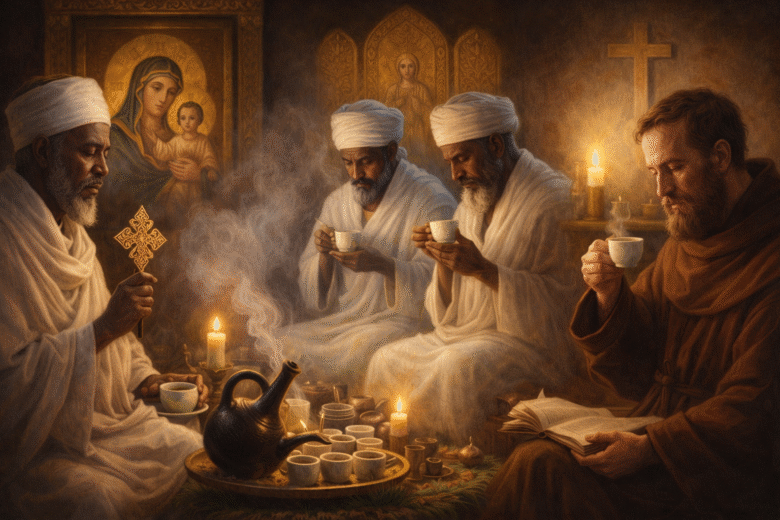
In Ethiopia, coffee isn’t just consumed — it’s revered through a complex ceremonial ritual.
The beans are roasted in front of guests, ground by hand, and brewed three times — each round with a deeper meaning.
The final round, baraka (blessing), is believed to bestow spiritual grace upon the drinker.
In this setting, coffee isn’t a beverage. It’s a portal to connection, respect, and presence.
Coffee and Meditation in the East
In parts of India and Sri Lanka, early Buddhist monks were introduced to coffee through trade.
Some used it during deep meditation to avoid falling asleep during long retreats.
While tea remained dominant, coffee was quietly adopted in monastic settings where silence and wakefulness were key.
This mirrors the way Sufi mystics had used it centuries earlier.
Banned but Sacred
Ironically, coffee’s religious use often led to it being banned.
In Mecca, Cairo, and Constantinople, authorities feared its influence on public gatherings and religious passion.
In 1511, the governor of Mecca even issued a formal ban on coffee, worried that it stirred rebellious spiritual energy.
But the bans rarely lasted. The demand was too strong, and coffee’s deep role in ritual too important.
The Dual Nature of Coffee
For centuries, coffee has walked a fine line — sacred and sinful, energizing and addictive.
It has been banned and blessed, feared and revered.
Its power to alter the mind — even slightly — made it both a threat and a tool for spiritual enlightenment.
Coffee as Today’s Ritual
Even now, our daily coffee routines echo ancient rituals.
Grinding the beans, breathing in the aroma, taking the first sip — it’s more than habit.
For many, it’s a moment of mindfulness.
In a world of distraction, coffee becomes an anchor. A grounding tool.
Not unlike the monks and mystics of the past, we use it to connect — to our day, our thoughts, and even our purpose.
Final Thoughts: More Than a Drink
Coffee’s journey through religious history proves one thing:
It was never just about caffeine.
From Sufi chants to Orthodox fasts, from tribal initiations to morning meditations, coffee has quietly supported spiritual seekers across centuries.
It wakes the body, yes — but it also sharpens the soul.
Perhaps your next cup is not just a routine.
It’s a ritual, rooted in sacred soil and ancient fire.

Nathan Scott is a passionate coffee enthusiast with years of experience exploring the world of beans, brews, and barista techniques. From home brewing tips to discovering the perfect roast, he shares practical advice to help coffee lovers elevate their daily cup. When he’s not testing new brewing methods, Nathan is visiting local cafés in search of unique flavors and stories. His goal? To make great coffee simple, enjoyable, and accessible for everyone.